Kansas City Irish Fest
Help guests choose the right waste receptacle quickly and reduce sorting errors.
Self-initiated experience design study based on firsthand observation.
Kansas City Irish Fest serves tens of thousands of guests over three days while attempting to separate waste into four streams: trash, compost, standard recycling, and reusable recycling.
I spent two days volunteering across roughly 75 waste containers—emptying bins and manually correcting items guests had placed in the wrong stream.
The problem wasn't that people didn't care.
Guests were being asked to make a surprisingly complicated decision at a moment when they weren't expecting to make one.
By the time someone approaches a trash can holding an empty cup, the system has seconds to change what they were already planning to do.
A guest isn't approaching the station thinking about waste management. They're trying to get rid of something.If they see what looks like a trash can first, they'll use it. If they're holding a recyclable cup but don't immediately see recycling, they have another decision to make: Do I keep carrying it? Is there recycling somewhere else? Or does the festival not recycle this?
With four possible destinations, signage alone has to overcome recognition, habit, attention, proximity, and time.
I treated disposal as a decision-design problem rather than a signage problem.
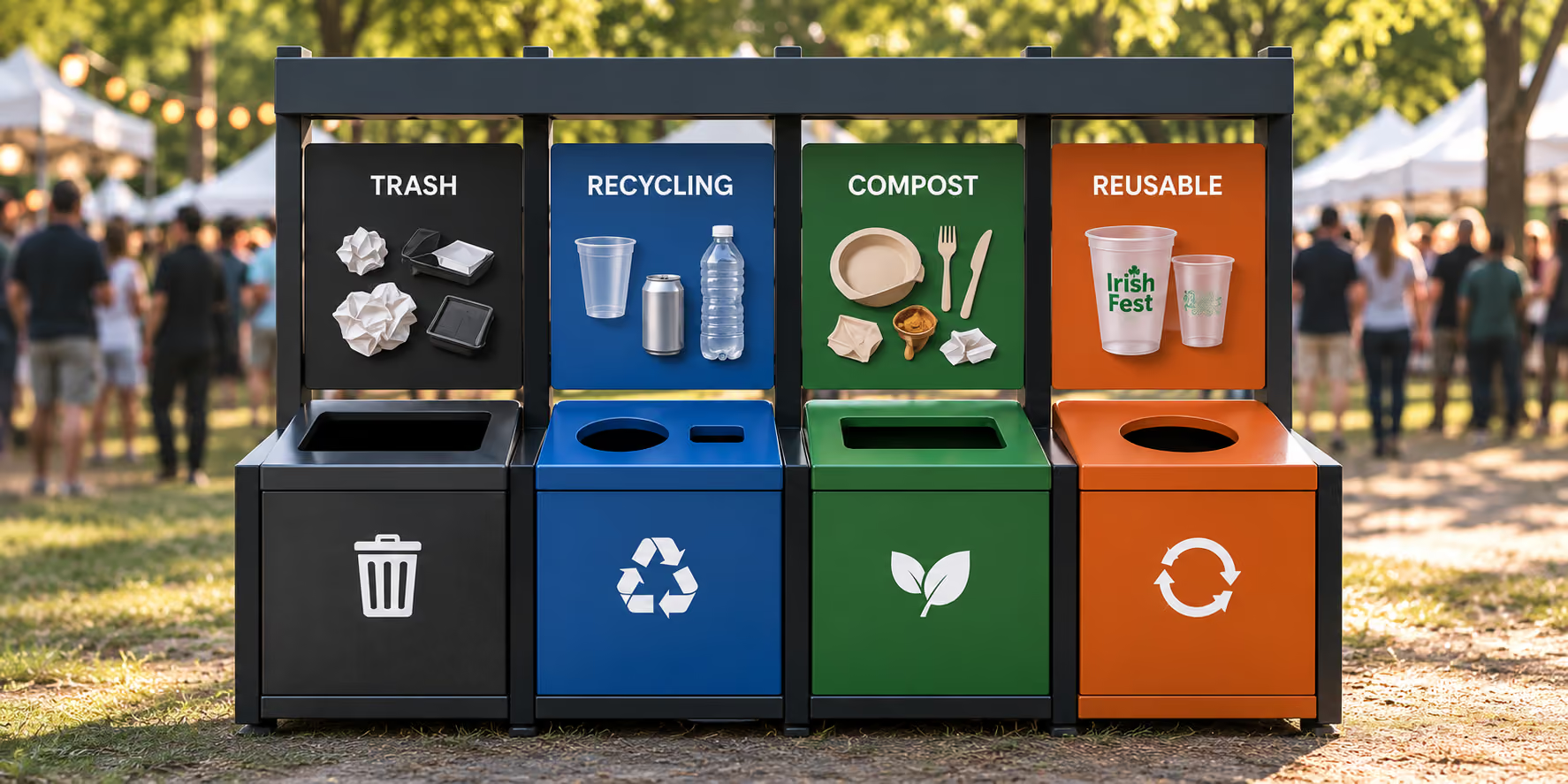
The most important change was simple: every disposal point should present all four choices together, every time, and in the same order and configuration whenever possible.
A trash receptacle should never appear by itself. Neither should recycling, compost, or reusable collection. If a guest has already decided “I'll throw this away here,” asking them to search for another receptacle creates friction at exactly the wrong moment. Keeping all four streams together ensures the correct choice is available when the decision is being made.
Consistency matters just as much. Once guests encounter the system, they should learn it. The same four choices, in the same sequence, using the same colors, openings, labels, and visual treatment throughout the festival turns each disposal decision into a more familiar one.
Always present the complete choice
Every station contains all four waste streams. No orphaned trash, recycling, compost, or reusable receptacles.
Build recognition through consistency
Keep the streams in the same order and use the same visual language at every station.
Show people where the thing in their hand goes
Use recognizable examples of actual festival waste rather than relying on category terminology or recycling symbols.
Make choices physically distinct
Use openings, shape, color, and placement together so four adjacent receptacles don't visually collapse into “four trash cans.”
Reduce ambiguity upstream
Coordinate vendor packaging and serviceware so fewer items are difficult to classify in the first place.
Recover intelligently
Use volunteers at high-volume stations during peak periods, where intervention can prevent errors instead of correcting them later inside bags.
The proposed system moves sorting upstream—from volunteers correcting mistakes after disposal to guests making better decisions at the point of disposal. Success could be measured through first-touch sorting accuracy, contamination rates by stream, the volume of material requiring manual re-sorting, and comparisons between station designs.